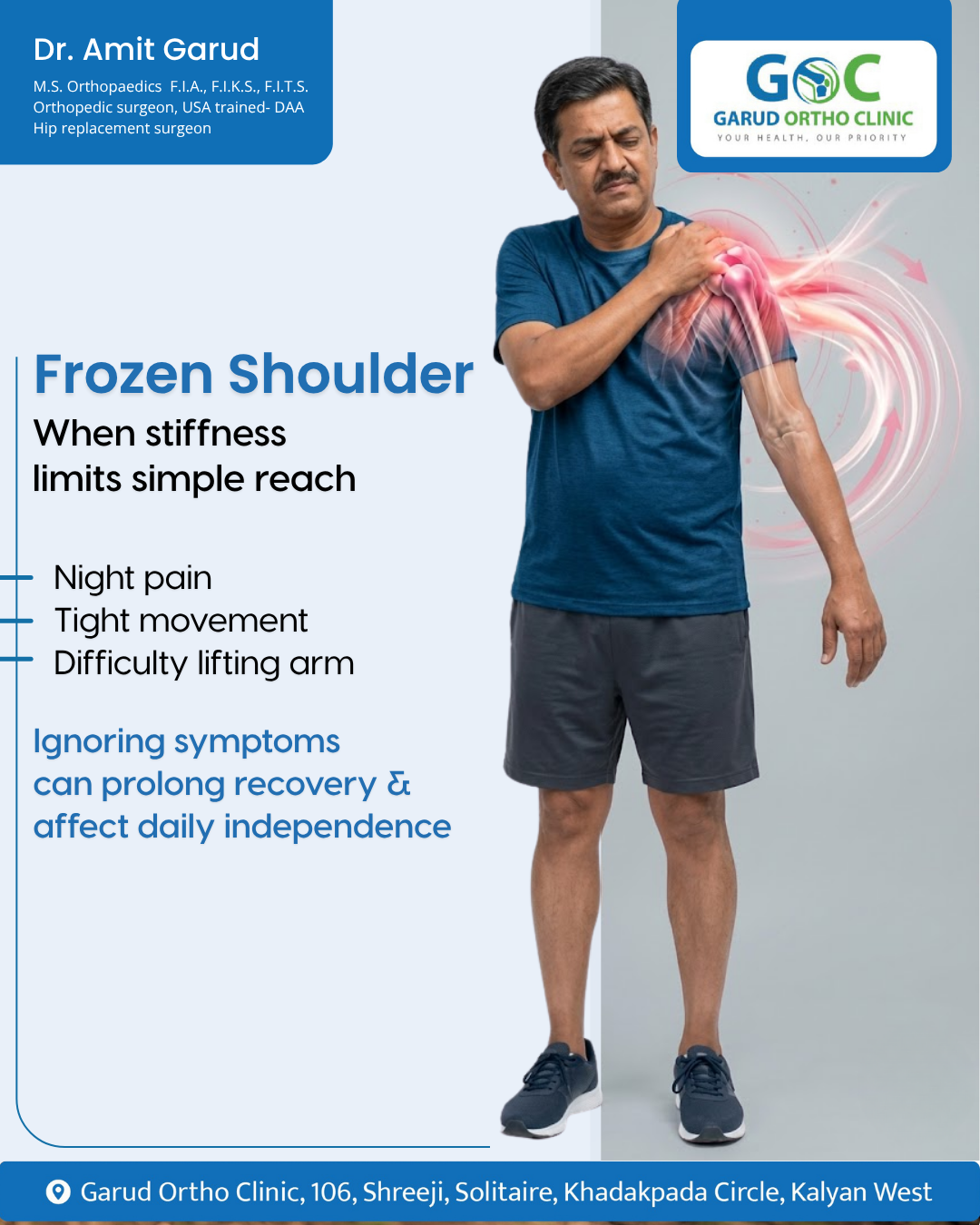
At Garud Ortho Clinic, Kalyan West, Dr Amit Garud — Orthopaedic Surgeon & Shoulder Specialist — often sees patients who ignore shoulder stiffness until daily activities become painful. Frozen shoulder (adhesive capsulitis) is a condition where the shoulder capsule becomes tight and inflamed, restricting movement.
According to the American Academy of Orthopaedic Surgeons (AAOS), frozen shoulder is more common in people with diabetes, thyroid issues, or prolonged immobilisation. It progresses in three stages: freezing, frozen, and thawing — each affecting mobility differently.
Common signs include:
Increasing stiffness while combing hair or reaching overhead
Night pain disturbing sleep
Difficulty rotating the arm
Reduced shoulder strength
Early physiotherapy, gentle stretching, and medical evaluation help prevent long-term stiffness. Ignoring symptoms can prolong recovery and affect daily independence.
Reference: AAOS Shoulder Stiffness Guidelines. Disclaimer: This post is for awareness. Please consult a qualified orthopaedic surgeon for personalised advice.
Keywords