Knee Dislocation: Serious Signs You Should Never Ignore
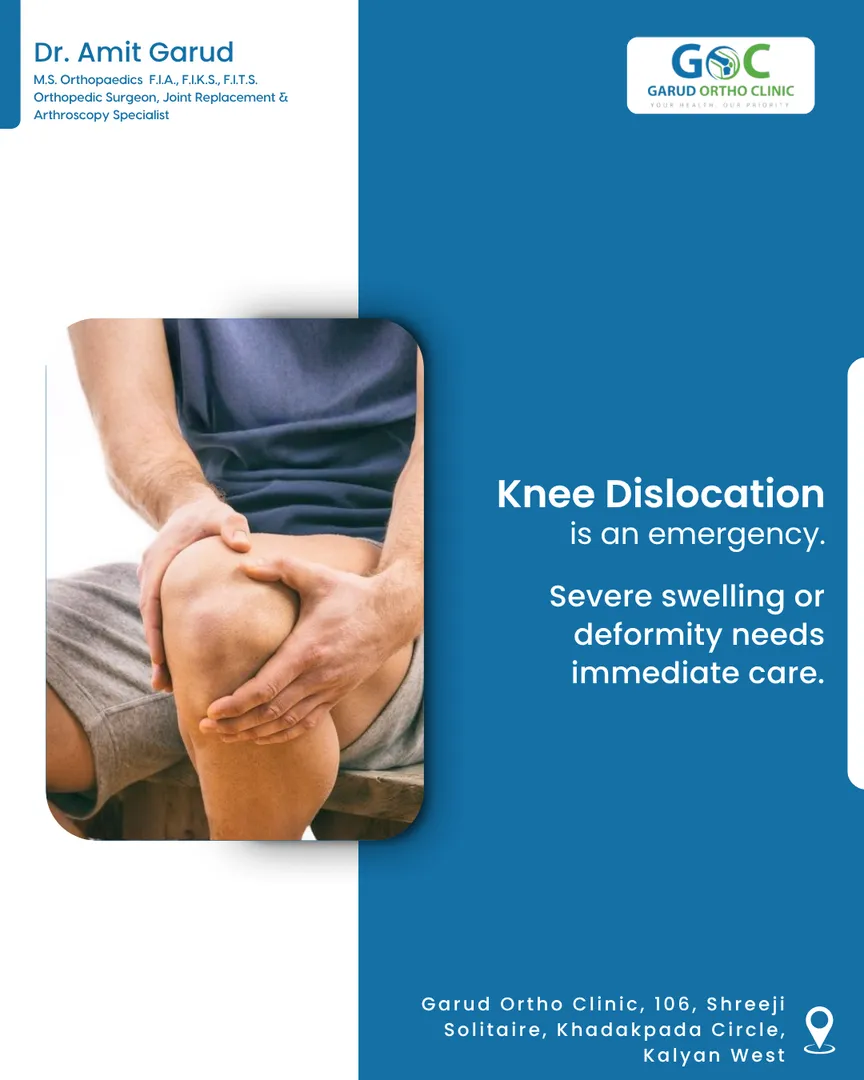
A knee dislocation is not the same as the knee “slipping” or feeling unstable. It is a major injury where the bones of the knee joint move out of place due to a high‑impact fall, accident, or sports trauma. At Garud Ortho Clinic, Khadakpada, Kalyan West, Dr. Amit Garud, Orthopedic, Arthroscopy & Joint Replacement Surgeon, treats such emergencies with timely and precise care.
How to Identify a Knee Dislocation
• Severe pain immediately after injury
• Visible deformity — the knee looks out of shape
• Swelling and bruising within minutes
• Inability to stand or bear weight
• Numbness or coldness in the foot (possible blood vessel injury)
• Feeling that the knee is “out of place”
A knee dislocation can damage ligaments, nerves, and blood vessels, making early treatment critical.
Do’s and Don’ts After Injury
Do:
• Keep the leg still
• Apply ice gently
• Seek urgent orthopedic care
• Support the leg with a temporary splint if available
Don’t:
• Do NOT try to “push the knee back”
• Do NOT walk or put weight on the leg
• Do NOT massage or apply heat
Treatment Options
Dr. Amit Garud performs a detailed clinical exam, X‑ray, and vascular assessment. Treatment may include closed reduction, immobilization, or arthroscopic/ligament reconstruction depending on the severity. Early treatment helps protect blood flow, restore stability, and prevent long‑term disability.
If you suspect a knee dislocation after an accident or fall, seek immediate orthopedic attention. Early intervention can save the joint and ensure safer recovery.
A knee dislocation is not the same as the knee “slipping” or feeling unstable. It is a major injury where the bones of the knee joint move out of place due to a high‑impact fall, accident, or sports trauma. At Garud Ortho Clinic, Khadakpada, Kalyan West, Dr. Amit Garud, Orthopedic, Arthroscopy & Joint Replacement Surgeon, treats such emergencies with timely and precise care.
How to Identify a Knee Dislocation
• Severe pain immediately after injury
• Visible deformity — the knee looks out of shape
• Swelling and bruising within minutes
• Inability to stand or bear weight
• Numbness or coldness in the foot (possible blood vessel injury)
• Feeling that the knee is “out of place”
A knee dislocation can damage ligaments, nerves, and blood vessels, making early treatment critical.
Do’s and Don’ts After Injury
Do:
• Keep the leg still
• Apply ice gently
• Seek urgent orthopedic care
• Support the leg with a temporary splint if available
Don’t:
• Do NOT try to “push the knee back”
• Do NOT walk or put weight on the leg
• Do NOT massage or apply heat
Treatment Options
Dr. Amit Garud performs a detailed clinical exam, X‑ray, and vascular assessment. Treatment may include closed reduction, immobilization, or arthroscopic/ligament reconstruction depending on the severity. Early treatment helps protect blood flow, restore stability, and prevent long‑term disability.
If you suspect a knee dislocation after an accident or fall, seek immediate orthopedic attention. Early intervention can save the joint and ensure safer recovery.
Keywords